
How to spot early signs you need roof repair
Your roof almost never fails overnight. Small issues develop first: a few worn shingles, a little staining on the ceiling, a faint musty smell in the hallway. Catching those early signs can be the difference between a simple repair and a major, expensive project that involves drywall, insulation, and even framing.
Roofing pros and organizations such as the National Roofing Contractors Association (NRCA) recommend having your roof inspected at least twice a year, often in spring and fall, so problems are found early.1 Between those visits, the more you know what to look for, the faster you can spot trouble and call a roofer before real damage sets in.
Quick answer
You likely need roof repair if you see damaged or missing shingles, heavy granule loss in gutters, sagging areas, new interior stains, or musty/moldy smells that weren’t there before. These are all signs that your roof may no longer be shedding water properly. Even if you don’t see active dripping, hidden moisture can rot wood, ruin insulation, and lead to mold growth over time.
Call a roofer promptly if you notice several of these warning signs, an active leak, or any sagging in the roof or ceilings. Treat dripping water, bulging drywall, or tree/branch impacts as same-day emergencies.
1. Outside warning signs on your roof
You can spot many roof problems from the ground with a pair of binoculars — no need to walk on the roof, which can be unsafe and can even damage some materials.
Look for:
-
Missing shingles
- Exposed dark underlayment or bare patches where shingles used to be.
- Common after windstorms; even a small bare spot can let water reach the roof deck.
-
Cracked, curled, or cupped shingles
- Shingles whose corners are lifting, edges are curled, or surfaces are split.
- This usually points to age, UV damage, or heat problems and means the shingle is losing its waterproofing.
-
Heavy shingle granule loss
- Asphalt shingles shed some grit over time, but piles of granules in gutters or at downspout outlets are a concern.
- Bald or shiny patches on shingles mean the top protective layer is gone and leaks are more likely.
-
Damaged or loose flashing
- Flashing is the metal around chimneys, skylights, vents, and in valleys.
- Look for gaps, rust, bent sections, or sealant that has cracked or fallen away. Even small gaps can allow water to penetrate.
-
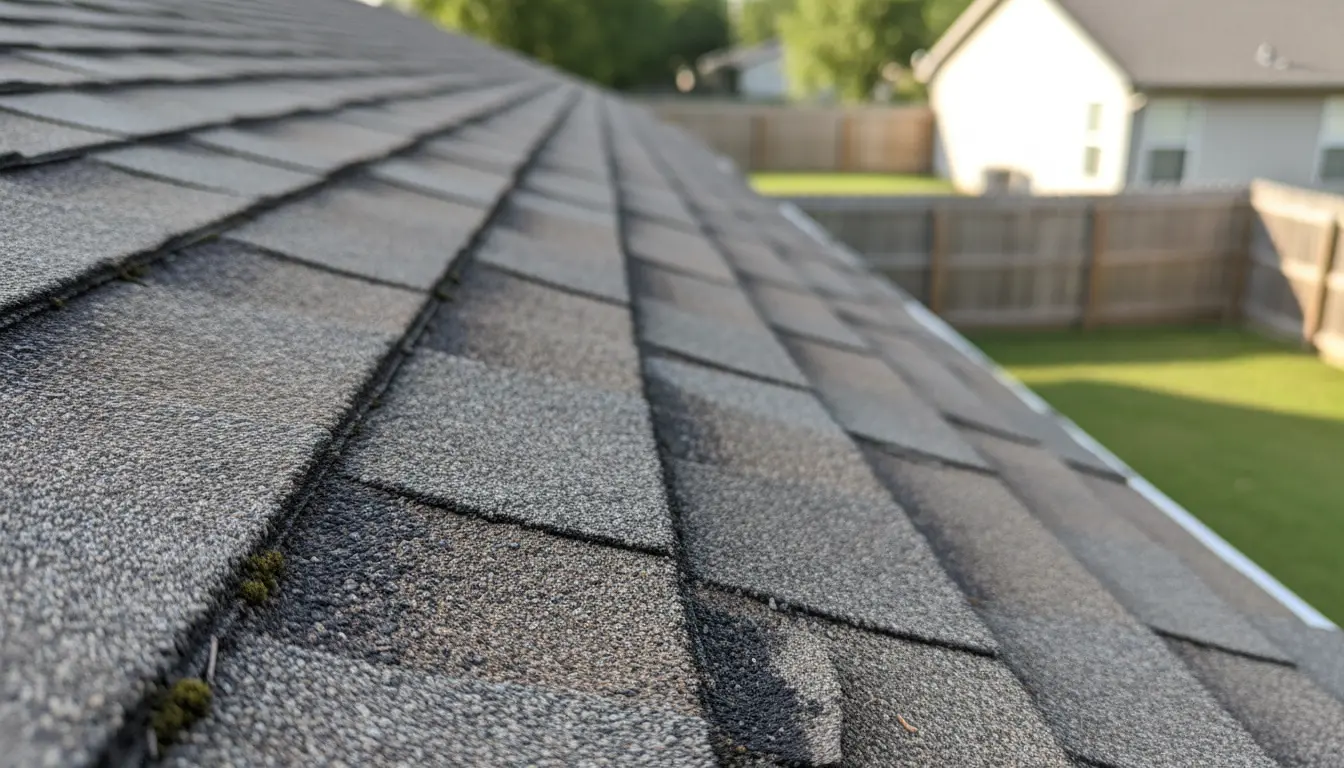
Moss, algae, or vegetation on shingles
- A little surface algae can be mostly cosmetic, but thick moss traps moisture.
- Persistent dampness can shorten shingle life and eventually lead to leaks.
If you see several of these issues on one area, it often means that section needs repair soon. Widespread shingle wear across the whole roof can be a sign the roof is nearing the end of its life.
2. Structure, gutters, and roofline red flags
Problems with how the roof sits and drains water can be more serious than a few worn shingles.
-
Sagging or dips in the roof plane
- Stand back from the house and look along the ridgeline and main slopes.
- Any noticeable dip, sag, or wave can indicate moisture-damaged decking or framing that needs professional attention.
-
Uneven or wavy lines along eaves
- The edge of the roof (by the gutters) should look straight.
- Wavy edges, drooping soffits, or fascia boards pulling away may mean long-term moisture issues at the roof edge.
-
Gutters pulling away or overflowing regularly
- Loose or separating gutters can let water run behind the fascia and into walls.
- Chronic overflowing (even after cleaning) can point to undersized gutters, poor slope, or too much roof runoff hitting one area.
-
Flat or low-slope areas with standing water or debris
- Puddles on a flat section of roof after 48 hours of dry weather are a warning sign.
- Ponding water can speed up membrane wear and eventually find its way inside.
Any visible structural sagging, movement, or long-term standing water is a strong reason to call a roofer soon for an inspection and repair plan.
3. Indoor clues: ceilings, walls, and attic
Many homeowners first discover roof problems from inside the house. Water almost always leaves a trace.
Ceilings and walls
Check every room, including closets and corners you don’t often look at:
-
New brown or yellow water stains
- Round or irregular stains on ceilings or upper walls are classic roof leak signs.
- A stain that grows after each rain means the leak is active and needs prompt attention.
-
Bubbling, peeling, or cracking paint and drywall
- Moisture behind paint can cause it to blister or peel.
- Soft, crumbly drywall or sagging ceiling panels are urgent red flags.
-
Warped trim or hardwood floors near exterior walls
- Persistent leaks near walls can swell baseboards, door casings, and flooring.
Attic and upstairs spaces
If you can safely access your attic, do a quick check during or right after a steady rain:
-
Damp insulation or dark, damp-looking patches on wood
- Wet insulation clumps together, feels heavy, and loses effectiveness.
- Dark streaks or rings on roof decking can show the leak path.
-
Daylight visible through the roof
- Small nail holes can be normal, but larger beams of light or visible gaps are not.
-
Rusty nails or metal plates and a musty smell
- Moist, poorly ventilated attics may develop mold or mildew.
- The U.S. Environmental Protection Agency notes that indoor mold usually indicates a moisture problem and can trigger allergic reactions and asthma in sensitive people.2
If you notice musty or moldy smells that linger, especially upstairs or after rain, assume there is a moisture problem somewhere in the building that needs to be found and fixed.
4. When to call a roofer (and when it’s an emergency)
Some roof issues can wait a short time for an appointment; others should be treated as urgent.
Call a roofer soon (days to a week) if you notice:
- A few missing or damaged shingles
- Granules piling up in gutters or by downspouts
- Moss or algae that seems to be spreading
- Isolated ceiling stains that appear after storms
- Loose or deteriorating flashing around a chimney, skylight, or vent
Treat it as an emergency and call for same-day help if you have:
- Active dripping or a steady leak during rain
- A ceiling that is bulging, sagging, or feels soft
- A tree limb or other impact that has hit the roof
- Large areas of shingles missing or torn after a storm
- Significant sagging in the roof surface or ridge
Bottom line: if water is coming inside, structural parts are sagging, or damage is widespread, you’ll save money and risk by bringing in a pro right away instead of “waiting to see.”
While you wait for a roofer, you can move belongings, place buckets under drips, and gently poke a severely bulging ceiling with a screwdriver (in a controlled way) to relieve trapped water into a bucket — but avoid climbing on a wet or storm-damaged roof yourself.
5. How to monitor and prevent future roof trouble
Even if everything looks fine now, a simple routine will help you stay ahead of issues:
- Know your roof’s age. Asphalt shingle roofs often last around 20–30 years, but harsh weather, poor ventilation, and lack of maintenance can shorten that.
- Take and save photos. Snap pictures of your roof and any stains you find; comparing over time makes subtle changes easier to spot.
- Keep gutters and downspouts clear. Clean at least twice a year or more often if you have overhanging trees.
- Trim back branches. Limbs rubbing on shingles or hanging over the roof increase the risk of damage and debris buildup.
- Schedule regular professional inspections. At least once a year, and ideally twice (spring and fall), gives a pro a chance to catch small issues early.1
When it’s time for a checkup or repair, use a reputable local roofing contractor. Directories like Roof Lists make it easy to compare roof repair companies and request multiple quotes so you can choose the right pro for your home.
Conclusion
Watch for small changes outside, inside, and in the air (musty odors), and call a roofer early when you see these warning signs so minor roof issues never have a chance to turn into major damage.