
Emergency roof repair steps after storm damage
When a storm rips shingles off or sends water pouring through a ceiling, the first hours really matter. The goal is simple: stay safe, slow the damage, and get the right people and paperwork in motion so repairs and insurance claims go more smoothly.
Step 1: Stay safe before you do anything else
Before you rush onto the roof or start moving soggy furniture, pause and check for hazards.
- Look for downed power lines, the smell of gas, or obvious structural damage. If you see any of these, get everyone out and call your utility company or emergency services.
- Do not climb on the roof during high winds, lightning, or heavy rain, or if the roof looks sagged, bowed, or unstable.
- Inside, avoid standing water that may be in contact with outlets or cords. If safe to reach, switch off power to affected rooms at the breaker panel.
Do your first "inspection" from the ground and from inside: use binoculars or a phone camera zoom instead of a ladder wherever possible.
Step 2: Do a quick, safe damage check
Once it is safe, get a basic sense of what happened so you can explain it to contractors and your insurer.
From the outside (stay on the ground if you can):
- Look for missing or curled shingles, displaced tiles, bent or punctured metal panels, or exposed underlayment.
- Check around chimneys, skylights, vents, and roof edges where flashing may have lifted.
- Note fallen trees or large limbs that hit the roof, even if they slid off.
From the inside:
- Look for new water stains on ceilings or walls, damp insulation in the attic, or active drips.
- Watch for bulging or sagging drywall; that can signal a ceiling holding a lot of water. Stand clear and carefully pierce a small hole into a bucket to relieve the weight if needed.
Make a simple written list of what you see, room by room. You will use this later when you talk to your insurance company and an emergency roofer.
Step 3: Document the damage thoroughly
Good documentation helps both contractors and insurance adjusters understand what happened and can speed up the claims process.1
Do this before you move too much or start temporary repairs, as long as it is safe:
- Take wide photos of each affected side of the house, then closer shots of specific roof damage if visible.
- Inside, photograph ceilings, walls, floors, wet belongings, and any standing water.
- Capture both overall room views and close-ups of serious damage.
- If safe pieces of roofing, flashing, or gutters are on the ground, photograph them before moving, then save them in a labeled bag or box.
Finally, jot down the date and approximate time of the storm, any emergency measures you took, and who you spoke with (neighbors, utilities, police, etc.). Keep this in one folder, physical or digital.
Step 4: Stop active leaks and protect the home
After you document the damage, focus on reducing further water intrusion. Many homeowner policies expect you to make reasonable temporary repairs and often reimburse those costs if the loss is covered, as long as you keep receipts.1 2
Inside the house:
- Move furniture, electronics, rugs, and valuables out of wet areas.
- Put plastic sheeting or trash bags over items that cannot be moved.
- Set out buckets, pans, and towels under active drips.
- If ceilings are bulging, stay out from underneath and consider carefully channeling water into a container as noted earlier.
Covering openings (temporary only):
If you can safely reach small areas (for example, a porch roof or a single missing shingle near a low edge), you can sometimes:
- Use heavy plastic sheeting and exterior tape or battens to cover small openings.
- Seal minor flashing gaps with roofing tape or roof cement, if you already have it on hand.
Avoid going on steep, high, or wet roofs; falls are a major cause of storm-related injuries. For most situations, it is safer to wait for an emergency roof repair crew to tarp or shrink-wrap the roof.
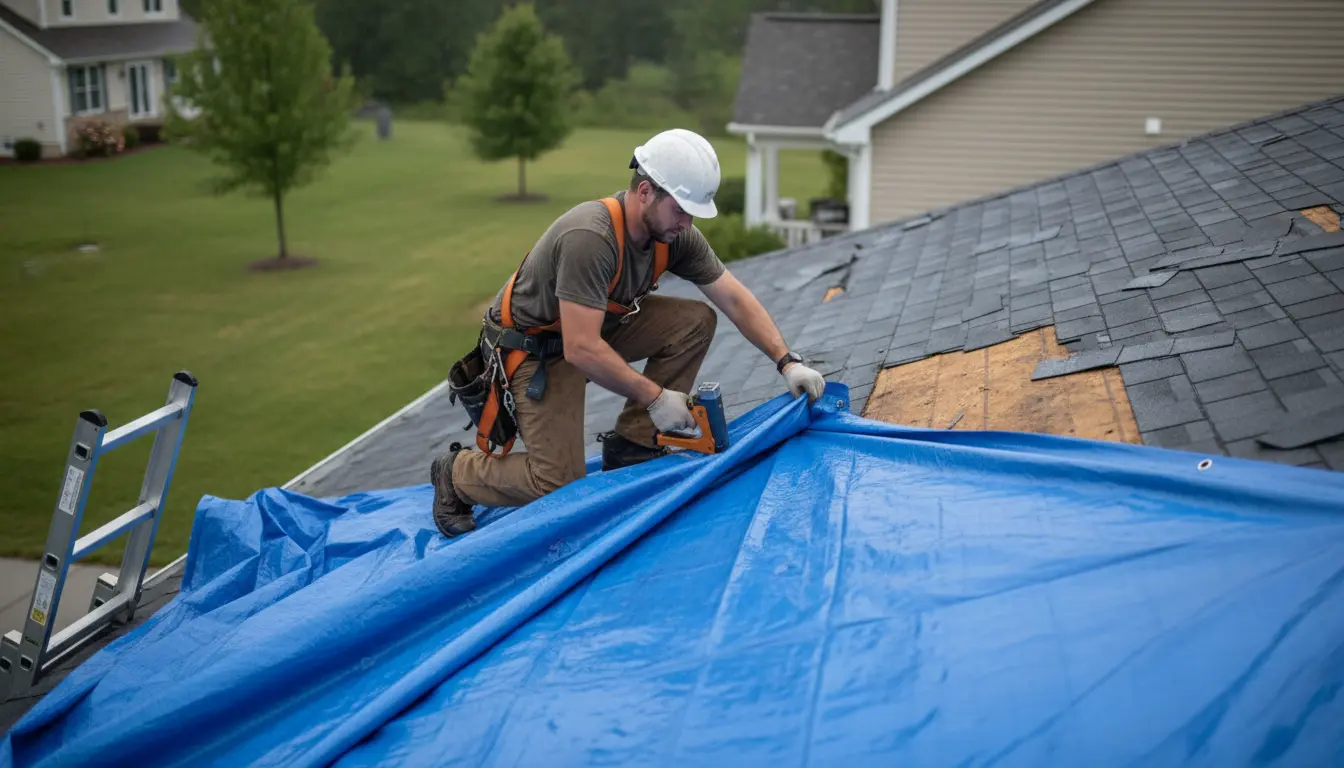
If you buy materials or hire someone for temporary work, keep every receipt and note what each item was used for. Take quick photos before and after the temporary repairs as well.1
Step 5: Call your insurance company
Once the immediate safety and leak-control steps are underway, contact your homeowners insurance company or agent as soon as you reasonably can. Most have 24/7 claim hotlines or mobile apps.1 3
Have this information handy when you call:
- Policy number (if available) and your best contact phone and email.
- The date and type of event (thunderstorm, hail, high wind, hurricane, etc.).
- A short description of the visible damage and any urgent issues, like an unsafe ceiling or roof hole.
Ask practical questions such as:
- How do they want you to submit photos and videos?
- What kinds of temporary repairs are expected or reimbursable?
- Are there preferred vendors for emergency tarping or board-up services?
- When can you expect an adjuster visit or virtual inspection?
Do not treat this as legal advice; each policy is different. As a practical rule, avoid starting permanent major work, like a full reroof, until you and the insurer have at least discussed the damage and you understand what they will inspect and when.2 3
Keep a simple log of every call: date, time, who you spoke with, and what was discussed.
Step 6: Request emergency roofing help
If the roof is open to the weather or leaks are significant, look for emergency roof repair or 24 hour roof tarping services in your area.
When you call a roofer, be ready to explain:
- Where the home is located and how badly the roof appears to be damaged.
- Whether there is an active leak inside and if ceilings or walls are compromised.
- Any special access issues, like a very steep driveway or pets on the property.
A reputable emergency roofer can often:
- Install a tarp or shrink-wrap system over damaged sections.
- Remove small fallen limbs from the roof.
- Secure loose flashing or edge metal.
- Provide a written estimate and photos of the damage.
Because storms attract opportunistic contractors, take a minute to vet anyone you hire, even in an emergency:
- Prefer local, established roofing companies with a physical address and online presence.
- Ask for proof of license and insurance where required.
- Get the scope of emergency work and pricing in writing before they start.
- Be wary of anyone demanding large upfront payment or asking you to sign over insurance benefits.
Once the immediate crisis is handled, you can use a contractor directory like Roof Lists to compare multiple roof repair quotes for the permanent fix.
What not to do after storm roof damage
A few missteps can make a bad situation worse:
- Do not climb on a wet, icy, or visibly damaged roof without proper training and equipment.
- Do not ignore "minor" leaks; water behind walls or under roofing can cause mold and structural rot.
- Do not make extensive permanent repairs or dispose of major damaged materials before the adjuster sees them, unless there is a clear safety or health reason. Insurers and state regulators commonly advise taking photos first, making only temporary repairs, and keeping receipts and damaged property for the claim review.1 2 3
- Do not sign long, complex repair contracts on the spot under pressure. Take at least a moment to read them and, if needed, compare with one or two other bids.
The bottom line in the first 24 to 48 hours: focus on safety, limit further water intrusion, and create a clean paper trail for both your insurance company and your roofer.
Conclusion
After storm damage, your best move is a calm, step by step response: stay safe, document, control leaks, call your insurer, and bring in a qualified emergency roofer to stabilize the roof.
Sources
Footnotes
-
North Carolina Department of Insurance, Loss Prevention and Aftermath and Claims and Adjuster Information pages, guidance on documenting storm damage, making temporary repairs, keeping receipts, and protecting property from further loss. https://www.ncdoi.gov/ ↩ ↩2 ↩3 ↩4 ↩5
-
Insurance Information Institute, Claims Filing Advice for Homeowners Affected by Hurricanes, Wildfires and Other Disasters, recommendations on temporary repairs, receipts, and working with adjusters. https://www.iii.org/ ↩ ↩2 ↩3
-
Louisiana Department of Insurance, consumer guidance on information about storm damage and filing a claim after a storm, including taking photos, making temporary repairs, and keeping receipts. https://www.ldi.la.gov/ ↩ ↩2 ↩3