
Choosing materials for a long lasting roof replacement
When you replace a roof, your material choice locks in how long it will last, how your home looks, and how it will perform in your climate. Instead of learning how to install each product, you mainly need to understand trade-offs: lifespan, warranty, weight, curb appeal, climate fit, and how picky each material is about workmanship.
The main roofing material options at a glance
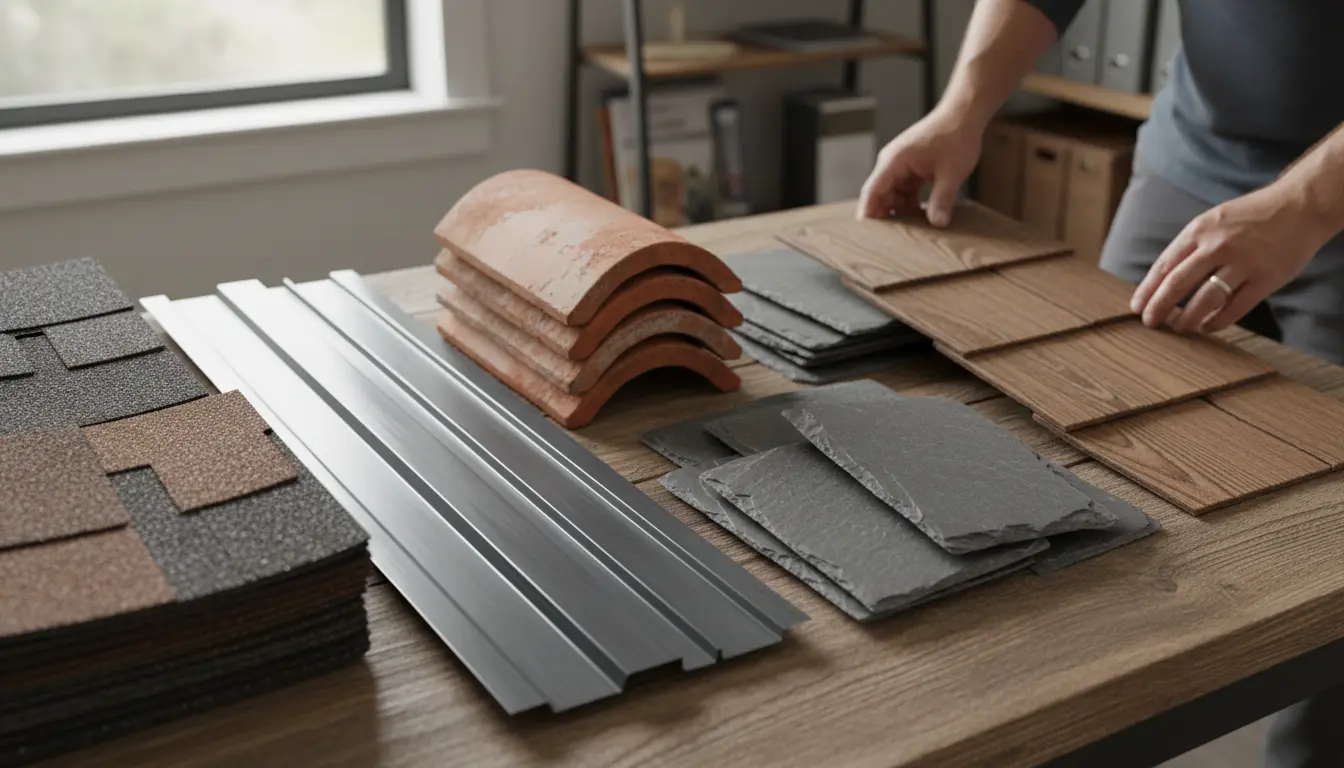
Before diving deeper, here's how the most common residential options stack up on longevity and general feel:
- Asphalt shingles (3-tab and architectural) - Most common; moderate lifespan, light-medium weight, wide range of prices and looks.
- Metal (steel, aluminum, sometimes copper) - Long lifespan, light weight, very good in harsh weather, modern or farmhouse look.
- Tile (concrete or clay) - Very long lifespan, heavy, great in hot/sunny climates and for Mediterranean/Southwest styles.
- Slate (natural stone) - Premium, extremely long-lasting, very heavy, classic high-end curb appeal.
- Synthetic (composite slate or shake, rubber, polymer blends) - Designed to mimic slate or wood with lower weight and more predictable performance.
Asphalt shingles: the baseline to measure against
Asphalt shingles are still the default choice for many U.S. homes, which makes them a good baseline.
Durability and lifespan
- Typical lifespan: About 20-30 years for architectural (dimensional) shingles in normal conditions; basic 3-tab shingles may be closer to 15-25 years depending on climate and maintenance.1
- They can age faster in intense sun, large temperature swings, or poor attic ventilation, which can cook the shingles from below.
- They're more vulnerable to hail impact and high-wind uplift than metal, tile, or slate, though higher-end shingles have improved ratings.
Warranty basics
- Many major brands offer limited lifetime material warranties on architectural shingles, but the fine print usually prorates coverage over time and may require installing a full "system" of brand-matched underlayments and accessories.1
- Workmanship (labor) is usually covered only by the contractor-often 2-10 years-unless you use a manufacturer-certified installer for extended coverage.
Weight, appearance, and climate fit
- Weight: Light to medium; most existing homes can handle asphalt without any structural changes.
- Curb appeal: Wide range of colors and profiles; can imitate wood shake or slate at a distance, though up close it still reads as shingle.
- Best fits: Moderate climates, typical suburban neighborhoods, and owners looking for good value without going ultra-premium.
Bottom line for asphalt: A practical, budget-friendly choice if you plan to be in the home 10-20 more years and don't need a multi-generation roof.
Metal roofing: long life and weather resistance
"Metal roof" usually means steel or aluminum panels (standing seam or metal shingles).
Durability and lifespan
- Typical lifespan: Around 40-70 years when properly installed and maintained.2
- Resistant to rot, insects, and general weathering, and highly resistant to wind uplift if fastened correctly.
- With proper underlayment, metal can perform well in snow (slick surface sheds snow), rain (modern systems are quiet), and high-wind coastal areas.
Warranty basics
- Common to see 30-50 year paint/finish warranties on coated steel or aluminum panels.
- Some manufacturers offer long limited warranties for watertightness when installed as a complete system by approved contractors.
Weight, appearance, and climate fit
- Weight: Surprisingly light-often lighter than asphalt per square foot-which can be helpful on older framing.
- Curb appeal: Clean, modern lines with standing seam; metal shingles can mimic shake, slate, or tile. Color options are broad, including high-reflectance "cool roof" finishes that reduce heat gain.3
- Best fits: Regions with heavy snow, intense sun, or high winds, or homeowners wanting a modern look and a long-term roof without going to tile or slate.
Tile roofing: concrete and clay for hot, sunny climates
Tile roofs-especially clay-are iconic in hot, sunny, and coastal regions.
Durability and lifespan
- Concrete tile: Often 40-50+ years if underlayment is maintained.
- Clay tile: Frequently rated 50-100 years or more; the tile itself can outlast multiple underlayment replacements.4
- Very resistant to UV, fire, and salt air; individual tiles can crack from impact but are usually replaceable.
Warranty basics
- Many manufacturers offer 50-year or limited lifetime warranties on the tile body; underlayment and labor have much shorter coverage.
Weight, appearance, and climate fit
- Weight: Heavy-often two to four times the weight of asphalt. You may need an engineer to verify that your framing can support it; structural upgrades can add cost.4
- Curb appeal: Distinctive Mediterranean, Spanish, or Southwest look; concrete can mimic clay, slate, or even wood.
- Best fits: Hot, sunny regions (tile naturally ventilates and reflects heat), coastal areas (clay handles salt air well), and homes designed for the look and structural load.
Slate roofing: the ultra-long-lasting classic
Natural slate is one of the most durable and premium roofing materials available.
Durability and lifespan
- Typical lifespan: High-quality slate can last 75-100+ years when properly installed and maintained.5
- Slate is fireproof, rot-proof, and resistant to insects and UV. Failure usually comes from fasteners or underlayment, not the stone itself.
Warranty basics
- Stone itself often carries very long or even lifetime material warranties; however, warranties on labor and accessories are much shorter.
- Performance heavily depends on an installer experienced with slate; poor workmanship can negate its lifespan advantage.
Weight, appearance, and climate fit
- Weight: Very heavy-comparable to or heavier than tile. Structural evaluation is essential for any retrofit.
- Curb appeal: Classic, high-end appearance; available in various thicknesses and colors (gray, black, green, purple, mixed).
- Best fits: Historic or upscale homes, colder regions where freeze-thaw is managed properly, and owners planning to stay long term or pass the home down.
Synthetic roofing: composite slate and shake
Synthetic (also called composite or polymer) roofing aims to capture the look of slate or cedar shake with less weight and more predictable performance.
Durability and lifespan
- Typical lifespan: Many products target 30-50+ years, but real-world data is still accumulating because these materials are newer than asphalt or tile.6
- Often engineered for impact resistance and UV stability, though performance varies by brand.
Warranty basics
- Common to see 30-50 year limited material warranties; some offer enhanced coverage if installed by certified contractors.
- As with others, workmanship is usually through the installer, not the manufacturer.
Weight, appearance, and climate fit
- Weight: Generally between asphalt and tile-lighter than real slate or concrete but heavier than some metal panels.
- Curb appeal: Designed to closely mimic slate or cedar shake with more consistent color and thickness.
- Best fits: Homes that want a premium, traditional look without the extreme weight of stone or the high maintenance of real wood.
Comparing weight and structure considerations
Roofing material isn't just about looks and lifespan-it also interacts with your home's structure.
- Lightest options: Metal and asphalt usually require no structural upgrades on typical homes.
- Heavier options: Tile and slate can add thousands of pounds to a roof; older homes or those built with minimal framing may need engineering review and reinforcement before installation.4
- If you're switching from asphalt to tile or slate, factor in the cost and logistics of structural evaluation and possible upgrades.
If your contractor doesn't mention structural implications when you ask about tile or slate, that's a red flag to keep shopping.
Matching materials to your climate and priorities
Rather than asking "What's the best roof?", ask "What's the best roof for this house in this climate with my plans?" Here's how to think it through.
Climate fit
- Hot/sunny climates: Clay or concrete tile, light-colored metal, and "cool roof" asphalt shingles can reduce heat gain and improve comfort.3
- Cold/snowy climates: Metal (for snow-shedding), well-installed asphalt, slate, and some synthetics perform well when paired with good attic insulation and ventilation.
- High-wind/coastal: Metal and properly rated asphalt shingles with high wind-resistance ratings are common choices; clay tile can work in some coastal areas when mechanically fastened and engineered correctly.2
- Hail-prone regions: Impact-resistant asphalt, metal, and some synthetic products are designed to better withstand hail.
How long you plan to stay
- 0-10 years: High-quality asphalt often makes sense; you get good curb appeal and marketability without over-investing.
- 10-30 years: Architectural asphalt, metal, or quality synthetic can align well with your planned time horizon.
- 30+ years / legacy home: Metal, tile, or slate become more attractive if you can absorb the higher upfront cost.
Curb appeal and neighborhood context
- Check what's typical on nearby homes-high-end neighborhoods with slate and tile can support those investments; in others, a well-chosen architectural shingle may fit better.
- HOA or historic district rules may limit what you can install or what colors are approved.
How to choose: a simple decision framework
Use this quick framework to narrow your options before you call contractors for quotes:
-
Confirm your structure and rules
- Ask: Can my roof framing handle tile or slate?
- Check: HOA, historic district, or local design restrictions.
-
Rank your top 3 priorities (for example: lifespan, lowest upfront cost, storm resistance, or style)
- If lifespan + low maintenance are #1 and #2, look at metal, tile, slate, or top-tier synthetics.
- If budget + decent lifespan top the list, architectural asphalt likely leads.
-
Match to climate
- Very hot/sunny or coastal: tile, light-colored metal, or cool-roof shingles.
- Snow and freeze-thaw: metal, asphalt, slate, or suitable synthetic with good underlayment and ventilation.
-
Talk to at least 2-3 contractors
- Ask each to price two materials you're seriously considering.
- Compare not just price, but warranty details, ventilation upgrades, and underlayment quality.
Conclusion
The best material for a long-lasting roof replacement is the one that fits your climate, structure, budget, and how long you plan to stay-whether that's durable asphalt, metal, tile, slate, or a well-chosen synthetic.
Glossary
- Architectural shingle - A thicker, laminated asphalt shingle with better appearance and durability than basic 3-tab.
- Cool roof - A roofing surface designed to reflect more sunlight and absorb less heat than a standard roof.
- Underlayment - The water-resistant layer installed between the roof deck and the primary roofing material.
- Standing seam - A type of metal roof with raised vertical seams that conceal fasteners.
- Impact-resistant shingle - A shingle tested to better withstand hail or debris impact.
Sources
Footnotes
-
Asphalt Roofing Manufacturers Association, "Residential Asphalt Roofing Manual" and typical manufacturer warranty/lifespan ranges. ↩ ↩2
-
Metal Construction Association and U.S. DOE, guidance on metal roofing durability and performance. ↩ ↩2
-
U.S. Department of Energy, information on cool roofs and reflective roofing materials. ↩ ↩2
-
National Roofing Contractors Association, technical information on clay and concrete tile roofs and structural considerations. ↩ ↩2 ↩3
-
National Slate Association, slate roofing technical bulletins on service life and installation. ↩
-
Various major synthetic/composite roofing manufacturers' published warranty and product data sheets (e.g., composite slate and shake products). ↩